 WAR ATLAS MILITARY HISTORY MAGAZINE · WWI — WWII
World War 2
1. Lead
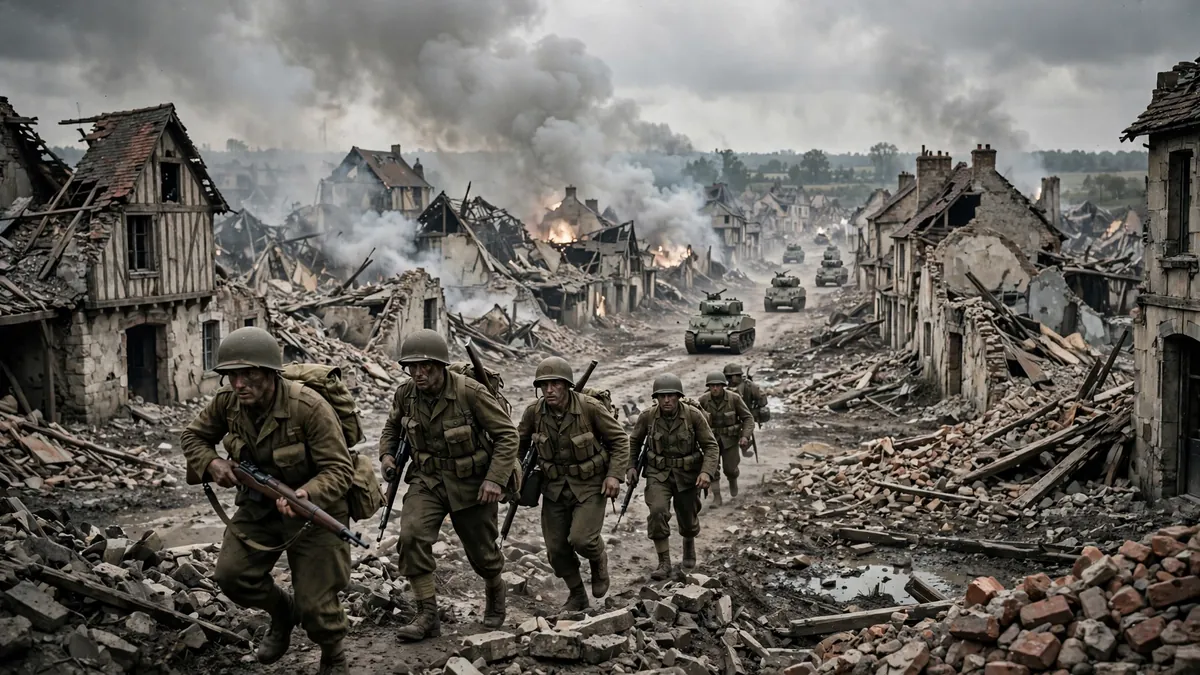
World War II — also called the Second World War — was the largest and deadliest armed conflict in human history. It began on 1 September 1939, when Germany invaded Poland, and ended on 2 September 1945, when Japan formally surrendered aboard the battleship USS Missouri in Tokyo Bay.
For six years the war touched nearly every part of the globe: more than 100 million people from over 30 countries served in uniform, and the fighting spread across Europe, North Africa, the Atlantic, the Pacific, and Asia. An estimated 70 to 85 million people died — roughly 3 percent of the world’s population at the time — including about 50 to 55 million civilians.
No other war killed so many people, destroyed so many cities, or changed the world so completely.
The war was fought between two great coalitions. On one side stood the Axis powers — Germany, Italy, and Japan — led by Adolf Hitler, Benito Mussolini, and the Japanese military government. On the other stood the Allies — at first Britain, France, and Poland, later joined by the Soviet Union under Joseph Stalin and the United States under Franklin D. Roosevelt, along with China and dozens of other nations. The Allies won, but the victory came at a terrible price. The war ended European colonial empires, destroyed Nazi Germany and Imperial Japan as military powers, and left the United States and the Soviet Union as the world’s two superpowers — a division that led directly to the Cold War.
World War II was also a war of crimes without precedent. Nazi Germany murdered about six million Jews in the Holocaust and millions of others — Soviet prisoners of war, Poles, Roma, disabled people, and political opponents. Japan committed mass killings in China, most notoriously the Nanjing Massacre of 1937–1938. Both sides bombed cities on a massive scale, and the war ended with the only use of atomic weapons in history, against Hiroshima and Nagasaki in August 1945. Out of this destruction came the United Nations, the Geneva Conventions, the Universal Declaration of Human Rights, and the idea — still contested today — that aggressive war itself is a crime.
2. Key Facts
| Dates | 1 September 1939 – 2 September 1945 (war in China began 1937) |
| Main theatres | Europe, North Africa, the Atlantic, the Pacific, China and Southeast Asia |
| Result | Allied victory; Germany and Japan defeated and occupied; United Nations founded |
| Axis powers | Germany, Italy (until 1943), Japan, plus Hungary, Romania, Bulgaria, Finland (co-belligerent) |
| Allied powers | United Kingdom, Soviet Union (from 1941), United States (from 1941), China, France, Poland, Canada, Australia and many others |
| People mobilised | Over 100 million in uniform from more than 30 countries |
| Total dead | Estimated 70–85 million, including 50–55 million civilians |
| Military dead | About 21–25 million |
| Soviet dead | About 26–27 million, the highest of any country |
| Chinese dead | Estimated 15–20 million |
| Jews murdered in the Holocaust | About six million |
| End of war in Europe | 8 May 1945 (VE Day); Germany signed unconditional surrender 7–8 May 1945 |
| End of war in the Pacific | 2 September 1945 (VJ Day); Japan signed surrender aboard USS Missouri |
3. Origins and Background
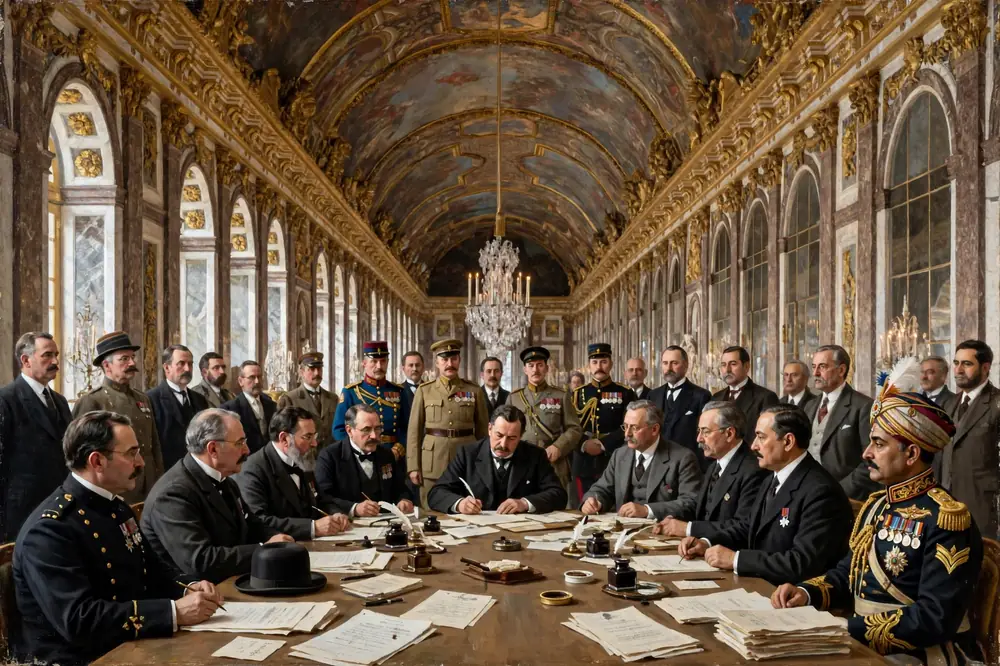
World War II grew directly out of the unfinished business of World War I. The Treaty of Versailles of 1919 blamed Germany alone for the First World War, stripped it of territory and colonies, limited its army to 100,000 men, and demanded reparations that were fixed in 1921 at 132 billion gold marks — a sum Germany could not realistically pay. Many Germans saw the treaty as a humiliation, a Diktat (dictated peace), and resentment of it became a powerful political force. The League of Nations, founded to keep the peace, had no army of its own and depended on its members’ willingness to act — a willingness that repeatedly failed in the 1930s.
The 1920s brought a fragile recovery. Germany’s economy stabilised under the Dawes Plan of 1924, and in 1925 Germany, France, and Britain signed the Locarno Treaties, promising to respect each other’s borders. But the Great Depression, which began with the Wall Street Crash of October 1929, destroyed that stability. World trade collapsed, unemployment soared — in Germany it reached about six million by 1932 — and democratic governments everywhere lost credibility. In Germany the crisis opened the door to Adolf Hitler and the Nazi Party, who promised jobs, national revival, and revenge for Versailles. Hitler became Chancellor on 30 January 1933 and within months had destroyed German democracy, banned opposition parties, and begun rearming in open defiance of Versailles.
Meanwhile, aggressive powers tested the world’s resolve and found it weak. Japan invaded Manchuria in 1931 and China in 1937. Italy under Mussolini invaded Ethiopia in 1935. Germany remilitarised the Rhineland in 1936, annexed Austria in March 1938, and demanded the Sudetenland from Czechoslovakia.
At Munich in September 1938, Britain and France agreed to give Germany the Sudetenland in exchange for Hitler’s promise of no further demands — the policy known as appeasement. Hitler broke the promise within six months, occupying the rest of Czechoslovakia in March 1939. By then Britain and France had finally decided to draw a line: they guaranteed Poland’s security.
When Germany invaded Poland on 1 September 1939, Britain and France declared war two days later. The Second World War had begun.
Historians still debate how much of this was inevitable. Some argue that the Versailles settlement made another war likely by humiliating Germany without disarming it permanently. Others point out that the war required specific choices by specific leaders — Hitler’s decision to invade Poland, Japan’s decision to attack the United States, Mussolini’s decision to join the war — and that at several points in the 1930s firmer action by Britain, France, or the League of Nations might have stopped the aggressors at lower cost.
What is not in doubt is that by 1939 the international order built after 1918 had collapsed, and that three expansionist powers — Germany, Italy, and Japan — were determined to redraw the map of the world by force.
4. The Main Powers
The war was fought by two coalitions whose members joined at different times and for different reasons. The Axis was the smaller but, in 1939–1942, the more successful coalition. Its core was the Tripartite Pact of 27 September 1940, which bound Germany, Italy, and Japan together. Germany was the dominant Axis power: the largest economy in Europe, with the most powerful army and air force on the continent in 1939–1941.
Italy, under Mussolini since 1922, was the weakest of the three major Axis powers — its industry was small, its armed forces poorly equipped, and its campaigns in Greece and North Africa repeatedly needed German rescue. Japan was a formidable naval and military power in Asia, with the world’s third-largest navy, but its economy was far smaller than America’s and it depended on imported oil and raw materials — a weakness that shaped its whole strategy.
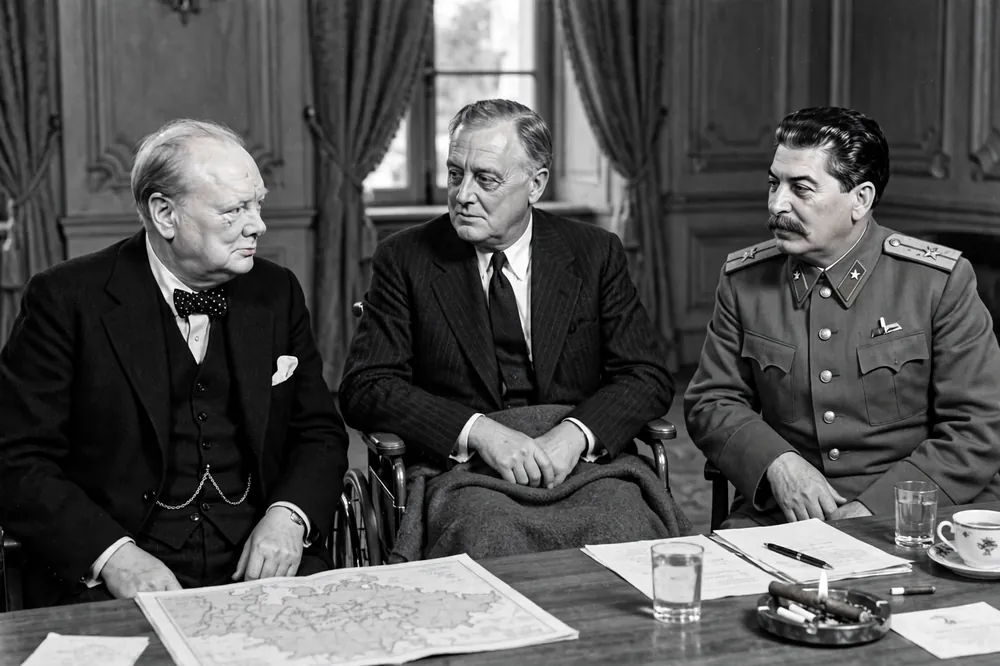
The Allies were a more diverse and, in the end, far stronger coalition. Britain, led by Winston Churchill from May 1940, fought alone against Germany for a year after the fall of France. The Soviet Union, which had signed a non-aggression pact with Germany in August 1939, joined the Allies when Germany invaded it on 22 June 1941; it provided the vast majority of the land fighting against Germany and suffered by far the heaviest losses.
The United States, the world’s largest economy, joined after the Attack on Pearl Harbor on 7 December 1941 and became the “arsenal of democracy”, supplying its allies with weapons, ships, aircraft, and food on a scale no other country could match. China had already been fighting Japan since 1937, tying down large Japanese forces for eight years.
France, Poland, Canada, Australia, New Zealand, India, and many other nations also contributed forces, and governments-in-exile from occupied Europe kept fighting alongside the Allies.
The imbalance of resources decided the war in the long run. In 1942 the combined industrial output of the Allies already exceeded that of the Axis, and the gap grew every year. The United States alone produced about two-thirds of all Allied war material in some categories, including roughly 300,000 aircraft during the war and more than 6,000 large ships. Germany and Japan fought with great tactical skill, but they could not replace their losses. The Soviet Union’s ability to move entire factories east of the Urals in 1941 and keep producing tanks and aircraft — over 100,000 tanks during the war — was one of the decisive achievements of the conflict.
5. The Course of the War
The war unfolded in three broad phases. The first phase, from September 1939 to late 1941, belonged to the Axis. Germany conquered Poland in five weeks, then Denmark and Norway in the spring of 1940, and then — in six weeks in May–June 1940 — defeated France, the power that had been expected to anchor the Allied defence.
Britain stood alone, surviving the Battle of Britain in the summer of 1940, when the Royal Air Force defeated the German Luftwaffe’s attempt to win air superiority over southern England. Meanwhile Germany turned east: in June 1941 it launched Operation Barbarossa, the largest invasion in history, with about three million men attacking the Soviet Union. By December 1941 German troops were at the gates of Moscow.
In the Pacific, Japan’s attack on Pearl Harbor brought the United States into the war, and in the months that followed Japan conquered Malaya, Singapore, the Philippines, and the Dutch East Indies with astonishing speed.
The second phase, 1942–1943, was the turning of the tide. Three great battles in 1942 changed the course of the war: Midway in June, where American carriers sank four Japanese fleet carriers; El Alamein in October–November, where the British Eighth Army under Montgomery defeated Rommel’s Afrika Korps in Egypt; and Stalingrad, where the Soviet Union encircled and destroyed the German Sixth Army between November 1942 and February 1943, at a cost of about two million casualties on both sides.
In 1943 the Allies invaded Sicily and Italy, Mussolini was overthrown, and Italy surrendered — though German forces continued to fight in Italy until 1945. In the Pacific, American forces began the long island-hopping campaign, taking Guadalcanal in early 1943 and moving steadily toward Japan. In the Atlantic, Allied anti-submarine warfare finally defeated the German U-boat threat in the spring of 1943.
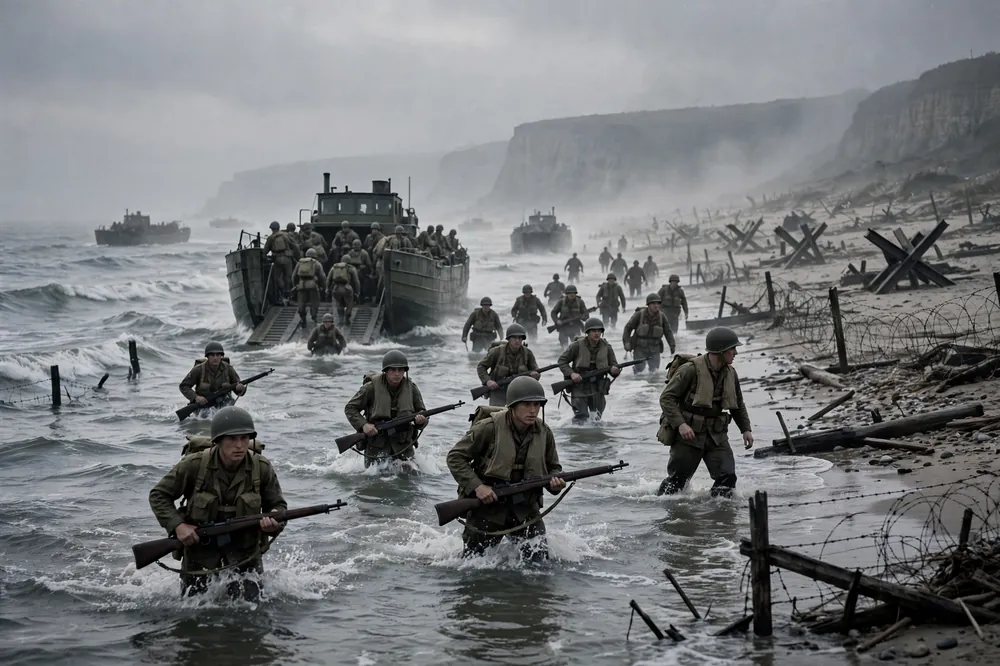
The third phase, 1944–1945, was the destruction of the Axis. On 6 June 1944 — D-Day — Allied forces landed in Normandy, the largest amphibious invasion in history, and liberated France within three months. In the east, the Soviet Union launched Operation Bagration in June 1944, destroying the German Army Group Centre and advancing to the borders of Germany by early 1945.
In the Pacific, American forces retook the Philippines, captured Iwo Jima and Okinawa in 1945, and began bombing the Japanese home islands. Germany surrendered on 8 May 1945, a week after Hitler’s suicide in Berlin. Japan fought on until August 1945, when the Soviet Union declared war on Japan and the United States dropped atomic bombs on Hiroshima (6 August) and Nagasaki (9 August).
Japan announced its surrender on 15 August and signed the formal surrender document on 2 September 1945. The war was over.
6. Turning Points
No single battle decided World War II, but a series of turning points between 1941 and 1943 shifted the balance irreversibly toward the Allies. The first was Germany’s invasion of the Soviet Union in June 1941. Hitler expected a quick victory like the campaign in France; instead he opened a front that would consume the bulk of the German army for four years. The Soviet Union’s vast territory, harsh winters, and enormous manpower absorbed the German attack, and the failure to take Moscow in December 1941 ended any hope of a short war in the east.
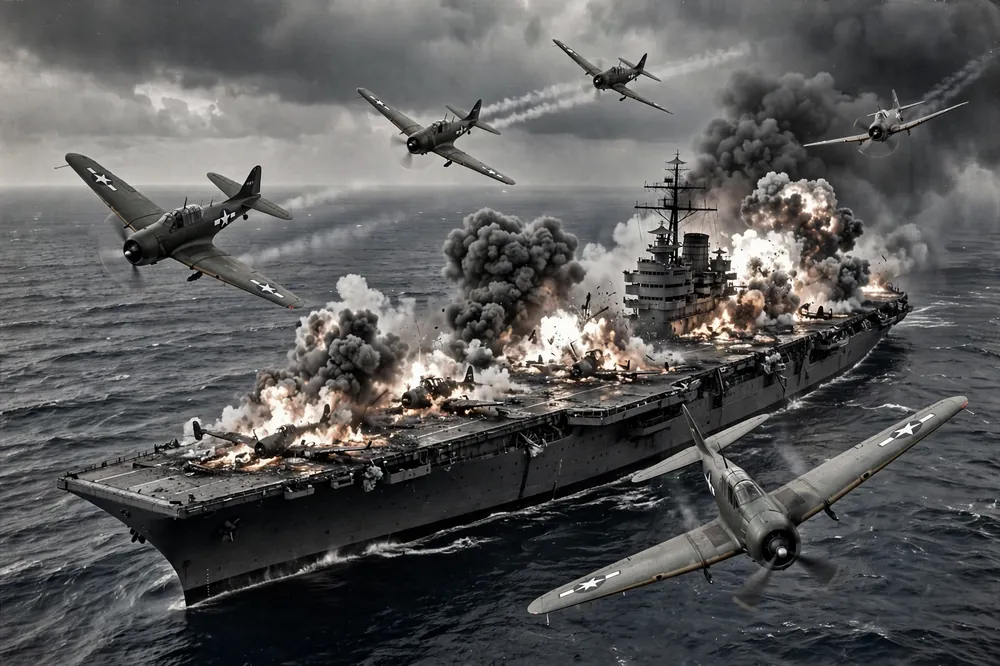
The second turning point was Pearl Harbor and the entry of the United States. Japan’s tactical victory on 7 December 1941 brought into the war the world’s largest industrial power — a country whose factories were beyond the reach of Axis bombers and whose population was more than double Japan’s. Franklin D. Roosevelt and Winston Churchill agreed on a “Germany first” strategy, but American industry supplied both theatres at once.
The third group of turning points came in 1942–1943 on the battlefield itself: Midway, El Alamein, Stalingrad, and the Battle of the Atlantic. After Midway, Japan could never replace its lost carriers and trained pilots; after Stalingrad, Germany could never replace its lost armies. From 1943 onward, the Axis fought a defensive war, retreating on every front. The Soviet victory at Kursk in July 1943 — the largest tank battle in history — ended Germany’s last great offensive in the east, and the Allied landings in Italy and then Normandy opened the western front that Germany had feared since 1940.
There was also a quieter turning point: production. By 1943 the United States was producing more aircraft in a year than Japan produced in the entire war, and Soviet factories were outproducing Germany in tanks. The Axis could still win battles, but it could no longer win the war of attrition. As Stalin reportedly put it, quantity has a quality all its own — and in this war, the Allies had the quantity.
7. Human Cost and Destruction
The human cost of World War II is difficult to grasp, and historians still disagree on exact figures. The most widely cited estimates put total deaths at 70 to 85 million people, including 50 to 55 million civilians. The Soviet Union suffered the most, with about 26 to 27 million dead — including roughly 8.7 million soldiers and about 18 million civilians who died from combat, starvation, disease, and German occupation policies.
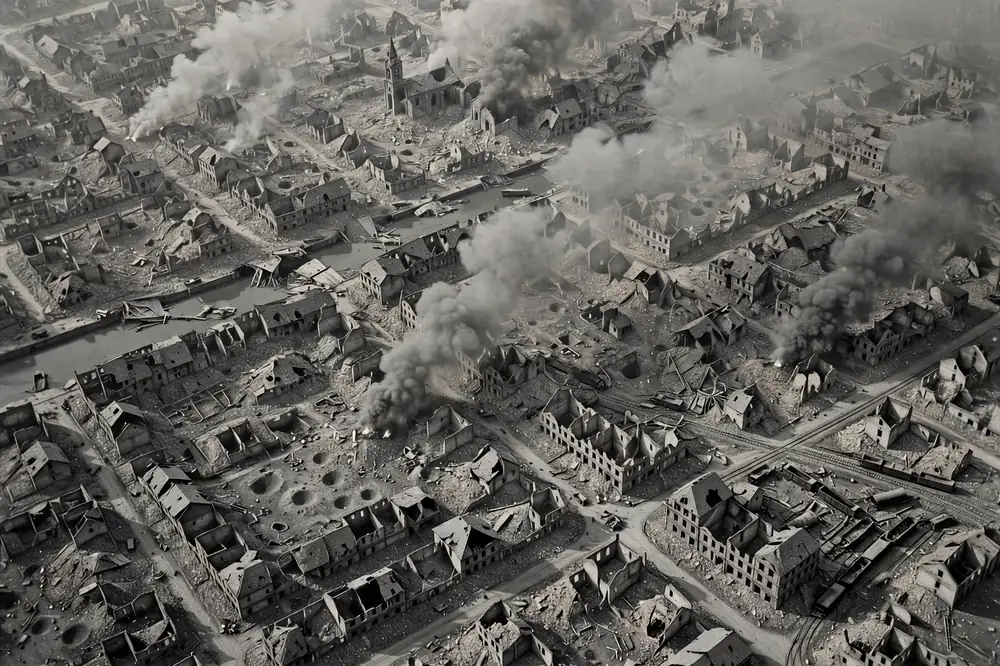
China lost an estimated 15 to 20 million people, most of them civilians, in a war that had begun in 1937. Germany lost about 5.3 million soldiers and roughly 2 to 3 million civilians. Japan lost about 2.1 million soldiers and up to a million civilians, including the victims of the atomic bombings and the firebombing of Tokyo.
Poland lost about 17 percent of its pre-war population — roughly 5.6 to 5.8 million people, including about three million Polish Jews murdered in the Holocaust.
The war’s deadliest feature was not battle but deliberate killing and the destruction of civilian life. The Holocaust — the systematic murder of about six million Jews by Nazi Germany — was the largest genocide in history, carried out in ghettos, mass shootings, and extermination camps such as Auschwitz, Treblinka, and Sobibor.
Nazi Germany also murdered about 3.3 million Soviet prisoners of war, about two million Poles, and hundreds of thousands of Roma, disabled people, and others deemed “undesirable”. In China, Japanese forces killed an estimated 200,000 to 300,000 people in the Nanjing Massacre of December 1937 to January 1938, and millions more died from other massacres, forced labour, and the disruption of war.
In Southeast Asia, about four million people died under Japanese occupation, including roughly one million in Vietnam’s famine of 1944–1945, where Japanese requisitioning and war disruption contributed to mass starvation.
Bombing killed on an industrial scale. The Allied bombing of Germany killed an estimated 350,000 to 600,000 German civilians; the bombing of Japan killed about 500,000 to 800,000 civilians, including about 100,000 in a single night of firebombing in Tokyo on 9–10 March 1945, and about 200,000 in the atomic bombings of Hiroshima and Nagasaki combined. At the end of the war, Europe’s cities lay in ruins: Warsaw was about 85 percent destroyed, and in Germany cities such as Hamburg, Dresden, and Cologne had lost large parts of their centres. More than 40 million Europeans were displaced from their homes, and millions of prisoners of war and forced labourers had to be repatriated.
The war also displaced peoples on a scale never seen before. About 12 to 14 million ethnic Germans fled or were expelled from Eastern Europe after the war. Millions of Jews who survived the Holocaust had no homes to return to. In Asia, the return of colonial powers after Japan’s defeat set off wars of independence in Indonesia and Indochina. The human cost of World War II did not end in 1945; its consequences shaped the lives of survivors and their children for decades.
8. Geography and Theatres
World War II was a genuinely global war, fought on land, at sea, and in the air across five continents. Its main theatres were distinct in character. The Eastern Front — the war between Germany and the Soviet Union — was the largest land war in history: a front line stretching some 1,500 miles from the Baltic to the Black Sea, where the majority of German combat deaths occurred and where battles like Stalingrad and Kursk involved millions of men. The Western Front was smaller but decisive in a different way: after the fall of France in 1940 it was dormant until the D-Day landings of June 1944, after which Allied armies advanced from Normandy into Germany itself.
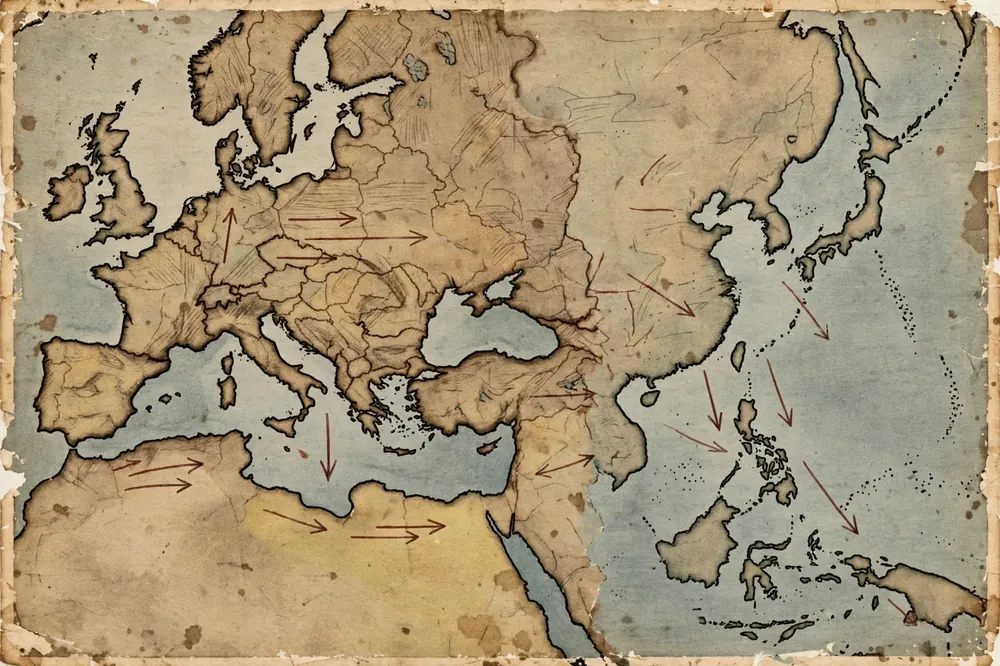
The war in the Pacific was primarily a naval and air war fought across vast ocean distances — the largest ocean on Earth. Island bases mattered more than territory: Midway, Guadalcanal, Tarawa, Iwo Jima, and Okinawa were tiny places whose airfields and anchorages decided the course of campaigns. American submarines sank most of Japan’s merchant fleet, cutting the islands off from the oil and raw materials they needed. The war in China was a grinding land war of enormous scale but limited mechanisation, fought across a country larger than Europe.
Two other theatres shaped the war’s outcome. The Battle of the Atlantic, fought from 1939 to 1945, was the longest continuous campaign of the war: German U-boats tried to starve Britain by sinking the ships that carried its food and supplies, while Allied convoys, protected by destroyers and aircraft, kept the lifeline open. The North African campaign (1940–1943) was a war of movement across desert, fought for control of Egypt, the Suez Canal, and the Mediterranean, and it ended with the surrender of about 250,000 Axis troops in Tunisia in May 1943. The Mediterranean itself — Sicily, Italy, Greece, and Yugoslavia — became a secondary front that tied down German divisions the Reich could not spare.
Geography also explains why the Axis lost. Germany fought a two-front war from June 1941, the very situation its generals had feared since the First World War. Japan fought across an empire too large to defend, with supply lines stretching thousands of miles across the Pacific. The Allies, by contrast, controlled the seas and the world’s industrial centres, and could move men and supplies between theatres as the situation required. The war was won not only on battlefields but on shipping lanes, in factories, and in the vast distances that swallowed Axis armies.
9. Outcome and Legacy
The outcome of World War II was the destruction of the old world order and the creation of a new one. Germany was divided into occupation zones and, from 1949, into two states: the Federal Republic of Germany (West) and the German Democratic Republic (East). Japan was occupied by the United States until 1952 and rebuilt as a democracy under a new constitution.
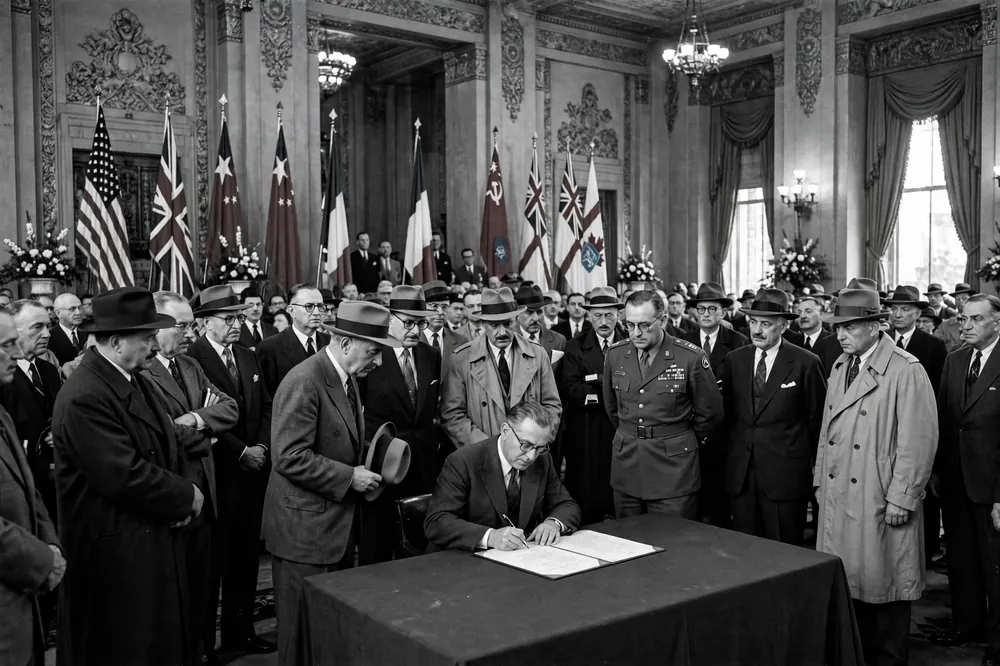
Italy lost its empire and became a republic. The great European empires — British, French, Dutch — were fatally weakened and collapsed within two decades as colonies across Asia and Africa won independence. The United States and the Soviet Union emerged as superpowers, and their rivalry — the Cold War — dominated world politics for the next 45 years.
The war also created new international institutions. The United Nations was founded in October 1945, with its Charter pledging to save succeeding generations from the scourge of war. The International Monetary Fund and the World Bank were created at Bretton Woods in 1944 to rebuild the world economy. The Nuremberg and Tokyo war crimes trials (1945–1948) established the principle that individuals — including heads of state — can be held responsible for crimes against humanity and for waging aggressive war. The Geneva Conventions of 1949 strengthened the laws protecting civilians and prisoners of war, and the Universal Declaration of Human Rights of 1948 set out rights that every person holds simply by being human.
The legacy of the war is still visible everywhere. The borders of Europe, the Middle East, and Asia still reflect decisions made at wartime conferences. The State of Israel was founded in 1948, in part as a response to the Holocaust. The division of Germany and Korea — and the division of Europe by the Iron Curtain — shaped politics until 1989–1991. Nuclear weapons, first used in 1945, have hung over international relations ever since. And the war remains the central reference point of modern history: every later conflict is measured against it, and the phrase “never again” — first spoken in the ruins of 1945 — still frames debates about genocide, aggression, and the responsibility to protect.
10. Leaders and Commanders
Adolf Hitler (Germany). Führer of Germany from 1933, Hitler was the central figure of the war in Europe. He made the key strategic decisions — the invasion of Poland, the attack on France, the invasion of the Soviet Union, and the declaration of war on the United States in December 1941 — and his racial ideology drove the Holocaust. As the war turned against Germany he increasingly overruled his generals, with disastrous results. He killed himself in his Berlin bunker on 30 April 1945.
Winston Churchill (United Kingdom). Prime Minister from May 1940, Churchill’s speeches and refusal to seek a negotiated peace kept Britain fighting after the fall of France. He forged the alliance with the United States and the Soviet Union, and with Roosevelt shaped the grand strategy of the war. He lost the general election of July 1945, before the war in the Pacific ended.
Joseph Stalin (Soviet Union). Leader of the Soviet Union, Stalin survived the catastrophic first months of the German invasion and organised the war effort that eventually destroyed the bulk of the German army. His leadership was ruthless — he ordered the execution or imprisonment of those he blamed for defeats, and Soviet soldiers faced punishment for retreating — but his decision to move industry east and to trust generals like Zhukov proved decisive. He remained in power until his death in 1953.
Franklin D. Roosevelt (United States). President from 1933 until his death in April 1945, Roosevelt led the United States from neutrality to full belligerency, organised the greatest industrial mobilisation in history, and shaped the post-war order at the Tehran, Yalta, and other conferences. He died on 12 April 1945, weeks before the German surrender, and was succeeded by Harry S. Truman, who ordered the atomic bombings of Japan.
Benito Mussolini (Italy). Leader of Italy since 1922, Mussolini joined the war in June 1940 expecting a short conflict. His armies performed poorly in Greece, North Africa, and the Soviet Union, and he was overthrown in July 1943. He was captured and executed by Italian partisans in April 1945.
Emperor Hirohito and General Hideki Tojo (Japan). Tojo, Prime Minister from October 1941, presided over the decision to attack Pearl Harbor and led Japan’s war government until July 1944. Emperor Hirohito, whose precise role in wartime decisions remains debated by historians, announced Japan’s surrender in a radio broadcast on 15 August 1945. Tojo was tried and executed as a war criminal in 1948; Hirohito remained emperor until his death in 1989.
Frequently Asked Questions
Related articles
Sources
- Encyclopædia Britannica, “World War II” — overview, dates, casualty estimates and the course of the war.
- Wikipedia, “World War II” — dates, participants, casualty figures (70–85 million) and battle summaries, cross-checked against scholarly sources.
- National WWII Museum (nationalww2museum.org) — timelines, casualty figures and the American war effort.
- Imperial War Museums (iwm.org.uk), “World War Two” — origins, turning points and the war’s legacy.
- Richard Overy, Why the Allies Won (W. W. Norton, 1995) — the industrial and strategic balance of the war.
- Antony Beevor, The Second World War (Weidenfeld & Nicolson, 2012) — narrative history of the whole war.
- United States Holocaust Memorial Museum (ushmm.org) — the Holocaust, six million Jewish victims, and other Nazi crimes.
- Gerhard L. Weinberg, A World at Arms: A Global History of World War II (Cambridge University Press, 1994).
- Max Hastings, Inferno: The World at War, 1939–1945 (Alfred A. Knopf, 2011).